
Making Sense of B2B Integration: Protocols, Formats, and Flexibility
April 15, 2025 | by Jodi Abrams

Business-to-business (B2B) integration has evolved significantly—from simple file transfers to real-time web-based communication. With so many options available today, selecting the right approach is about more than just current needs; it’s about choosing a solution that supports long-term adaptability.
Common Protocols for B2B Communication
Different industries and partners use different methods to exchange data. Here are the most common:
• FTP/SFTP – Reliable for scheduled batch file transfers; SFTP adds security.
• AS2 – A secure protocol commonly used in retail, healthcare, and logistics.
• REST APIs – Ideal for cloud-based, real-time data exchange.
• Webservices – Structured and standards-based (SOAP/XML or REST/JSON), often used in enterprise systems.
File Formats in B2B Data Exchange
The structure of the data is just as important as how it’s sent:
• Flat/Delimited Files (CSV, TSV) – Simple and widely used, especially for internal or legacy systems.
• EDI (e.g., X12, EDIFACT) – A long-standing standard for structured business documents.
• XML/JSON – Flexible, machine-readable formats used in APIs and modern
Choosing a Flexible Integration Approach
No single protocol or format fits every partner or system. The most effective B2B strategies use platforms that can support multiple communication methods and file types. This flexibility allows businesses to:
• Connect with a wide range of partners
• Adapt to new standards and technologies
• Scale integrations without reworking core infrastructure
From legacy flat files to real-time APIs, each integration method plays a role. The key is selecting a solution that supports variety—so your business can grow, adapt, and stay connected in an ever-evolving digital landscape.
About the Author

Jodi Abrams
Related Articles

Your EDI Is “Managed” - But Who Manages the Failures?
There’s a big difference between having someone manage your EDI maps and having someone manage your EDI.
EDI 820 Payment Processing in SAP
From EDI 820 to Cash Applied: How Arcus Automates Payment Advice Posting in SAP
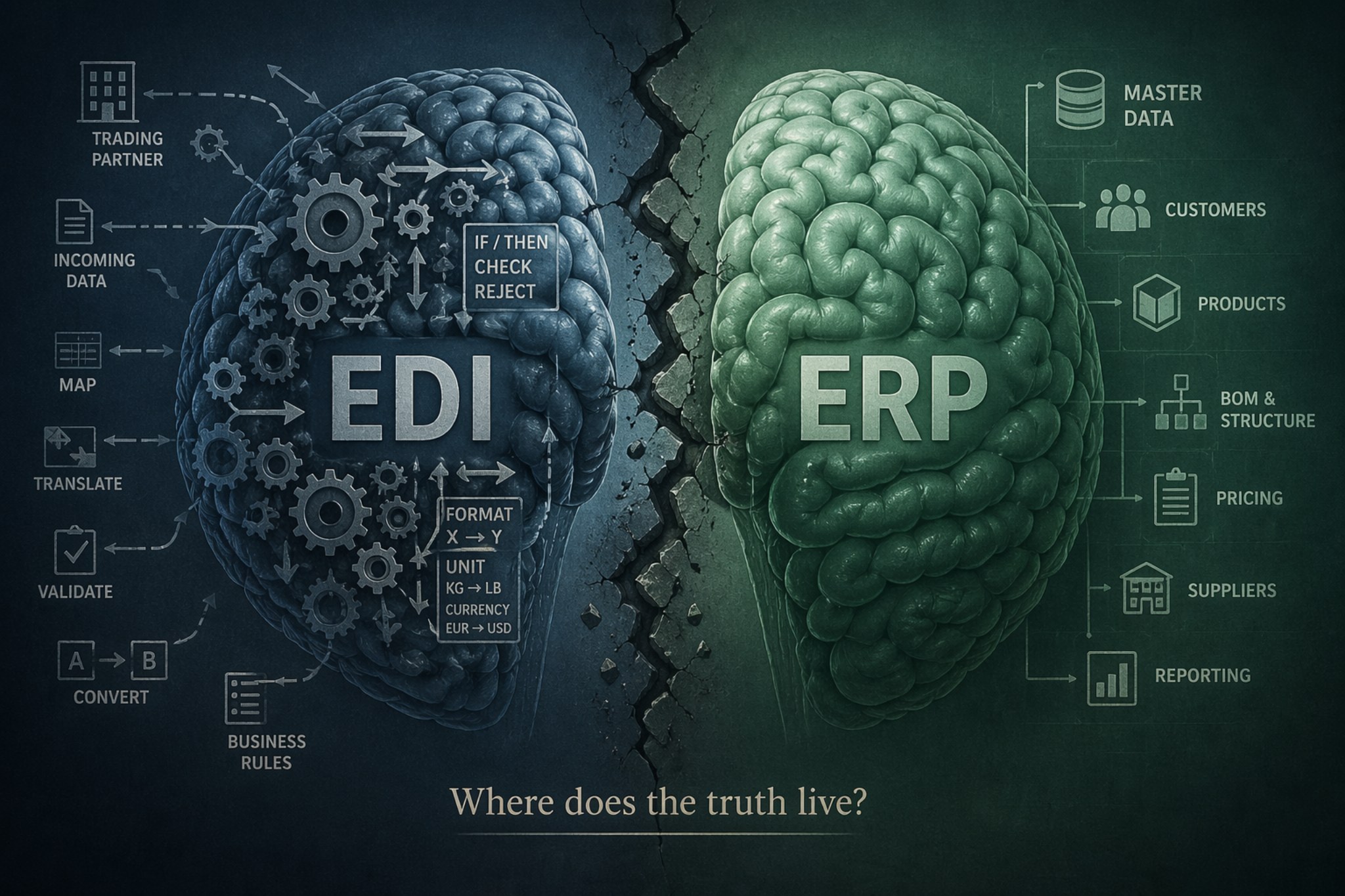
Single Source of Truth in EDI - Easier Said Than Done
How small EDI fixes like lookups, conversions, and custom rules can slowly pull business logic out of your ERP and create long-term complexity.